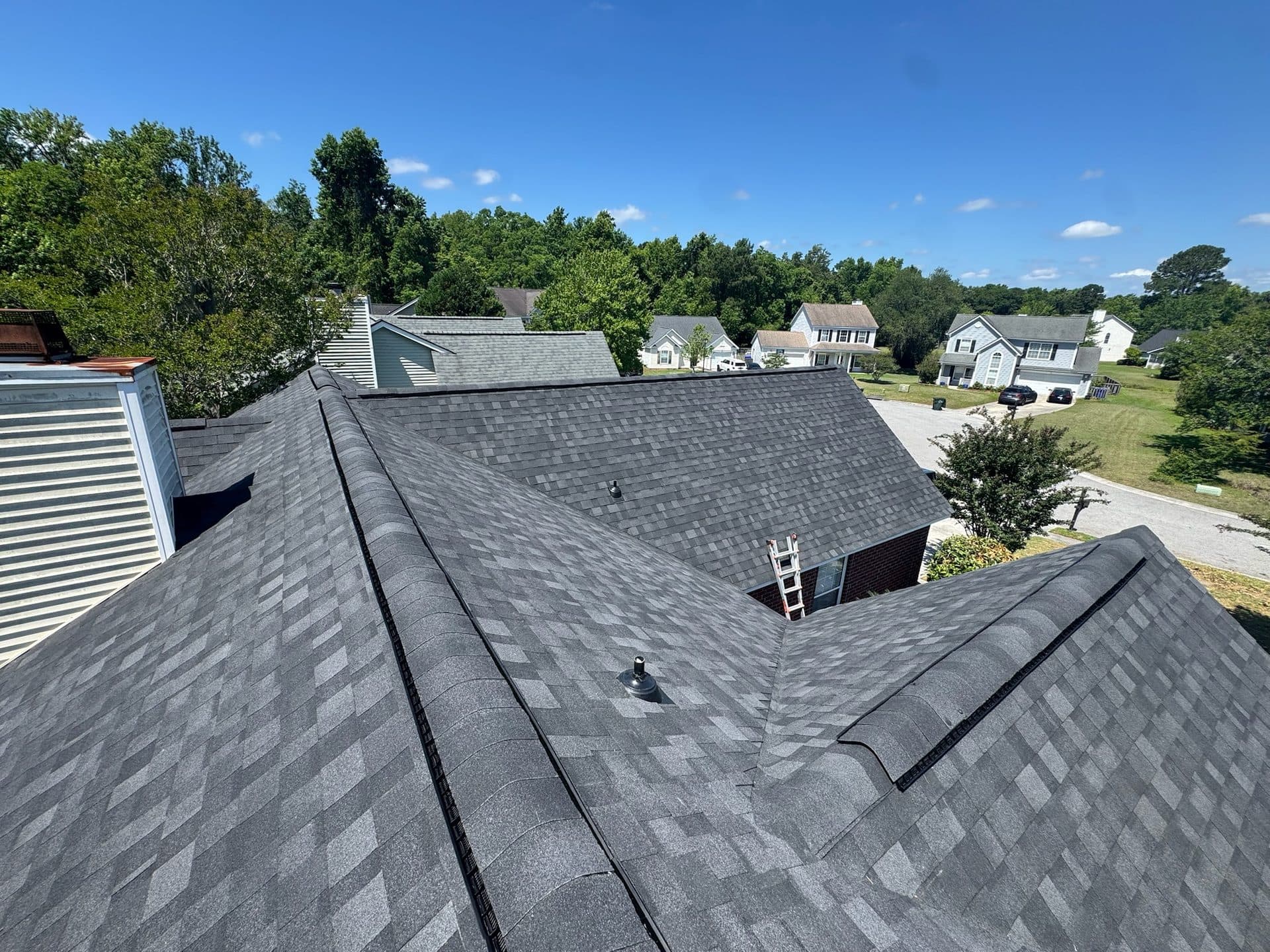
After a strong coastal storm, the safest first move is not climbing onto the roof. Start with a careful ground-level check, document what you can see, and arrange a professional inspection when shingles, flashing, gutters, or interior surfaces show signs of damage.
Key Takeaways
- 1Stay off a wet, steep, or visibly damaged roof and inspect from the ground first.
- 2Photograph exterior and interior damage before temporary repairs begin.
- 3Emergency tarping can limit water intrusion while a permanent repair is planned.
- 4A written roof inspection helps organize repair decisions and insurance documentation.
Start With Safety, Not a Ladder
Wind-driven rain can damage shingles, flashing, vents, and gutters without leaving an obvious hole. Walk the perimeter from a safe distance and use binoculars or a zoom camera if needed. If you see a downed power line, a leaning tree, structural movement, or active water entering near electrical fixtures, leave the area and contact the appropriate emergency service.
For a closer assessment, schedule a Charleston storm damage roof inspection. Tucker Contractors can document visible damage, identify urgent leak paths, and explain the next practical step.
Photograph the Condition Before Cleanup
Create a simple record before debris is moved or temporary work begins. Take wide photos of each roof slope from the ground, then add close-ups of visible damage. Photograph ceilings, attic areas, walls, and flooring if water has entered the home. Keep notes with the date of the storm and the rooms affected.
The Federal Emergency Management Agency recommends photographing damage before cleanup and saving receipts for disaster-related expenses. Your insurer may have additional requirements, so contact the carrier promptly and follow its instructions.
Ground-Level Signs Worth Documenting
- Missing, lifted, creased, or displaced shingles
- Bent flashing around chimneys, walls, vents, or skylights
- Gutter sections pulling away from the fascia or overflowing in one area
- Roof debris, shingle granules, or metal pieces on the ground
- New ceiling stains, damp insulation, or peeling paint indoors
Use Temporary Protection When Water Is Entering
A temporary tarp is meant to slow additional water intrusion until permanent repairs can be completed. Tarping is especially useful when a branch impact, missing shingles, or damaged flashing has left an exposed area. It is not a substitute for a repair, and installation should be handled safely.
If the damage is actively leaking, ask whether emergency tarping and roof repair should be the first step. A contractor can prioritize the exposed area while evaluating the rest of the roof.
Request a Written Roof Inspection
Storm damage is not always isolated to the most visible spot. A professional inspection should look at roof coverings, flashing, penetrations, drainage, and accessible interior areas. Ask for written findings and photos so you can distinguish immediate repairs from maintenance items.
For post-storm documentation, real estate needs, or a second opinion, schedule a professional roof inspection in Charleston. If damage is limited, a targeted repair may be enough. If the roof has widespread wind damage or is nearing the end of its service life, replacement may be the better long-term decision.
Charleston Storm Damage Checklist
- Inspect the property from the ground and avoid unsafe areas.
- Photograph exterior and interior damage before cleanup.
- Move belongings away from active interior leaks when it is safe to do so.
- Contact your insurer and follow its documentation process.
- Arrange emergency tarping if the roof is exposed.
- Schedule a written professional inspection before approving permanent work.
Get a Clear Plan After the Storm
The best post-storm plan is specific: stop active leaks, document the condition, and repair only what the roof actually needs. Request a free estimate from Tucker Contractors for a straightforward assessment in Charleston and the surrounding Lowcountry.