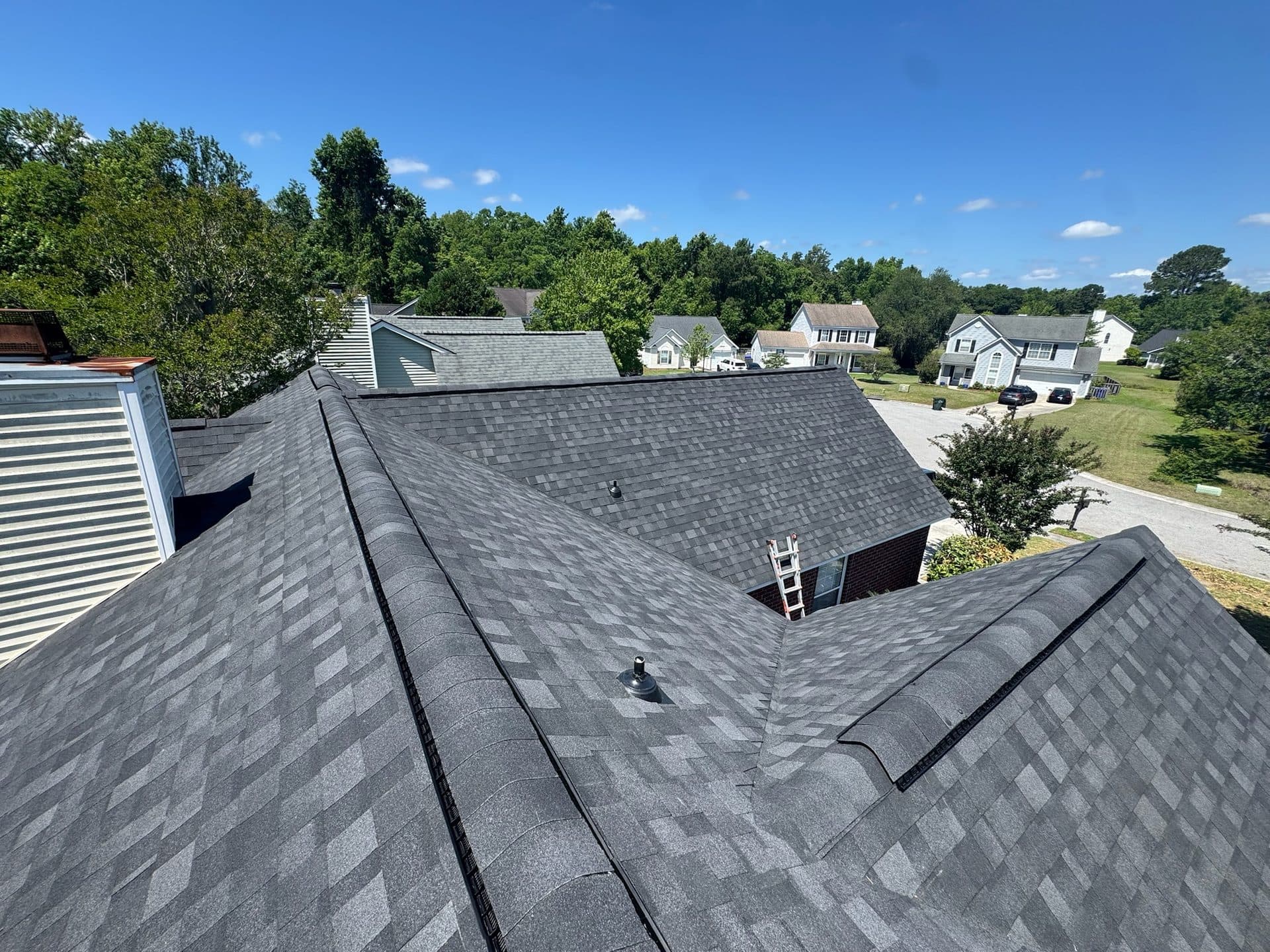
After a coastal storm passes, a roof can look fine from the driveway and still be hiding real problems. Knowing the early wind damage roof signs helps you catch trouble before a small lifted shingle turns into an attic leak and a much larger repair.
Key Takeaways
- 1Wind damage often shows up as subtle lifted or creased shingles long before a leak appears.
- 2Granule loss, exposed nail heads, and bent flashing are common post-storm warning signs.
- 3Interior clues like attic staining or musty smells can point to a roof problem overhead.
- 4A professional inspection finds damage that is hard to see from the ground.
Wind Damage Does Not Always Leak Right Away
Coastal storms put a lot of stress on a roof. Strong gusts can loosen the seal under shingles, lift tabs, and work fasteners loose without tearing anything off. That is why a roof can survive a storm looking intact and still develop a leak weeks later. The earliest wind damage roof signs are usually small, which is exactly why they get missed.
Walking the property after a storm and knowing what to look for gives you a head start. The goal is to find damage while it is still a minor fix instead of waiting for water to find its way inside.
Signs You Can Spot From the Ground
You do not need to climb up to notice that something is off. From the yard, look for shingles that appear lifted, curled, or out of alignment compared to the rows around them. A creased shingle that flapped in the wind and laid back down often has a faint horizontal line across it.
Common Outdoor Warning Signs
- Lifted or creased shingle tabs that no longer sit flat
- Granules collecting in gutters or at the base of downspouts
- Bent, lifted, or missing metal flashing around chimneys and walls
- Exposed or backed-out nail heads on the roof surface
- Bare spots where the asphalt mat shows through
Granule loss matters because those granules protect the shingle from the sun. Once they wash away in patches, that section ages faster than the rest of the roof.
Clues You Might Find Inside the Home
Some of the most telling signs are indoors. Head into the attic with a flashlight after a storm and look for damp insulation, water staining on the underside of the decking, or daylight showing through anywhere it should not. A musty smell or a fresh stain on a ceiling can also point to water entering overhead.
If you suspect storm-related damage, it helps to involve a professional early. Tucker Contractors handles storm damage roof service in Charleston and can document what the wind actually did up close.
Why a Professional Inspection Matters
From the ground, it is genuinely hard to tell a cosmetic scuff from a broken seal that will leak. A trained eye checks the shingle seals, flashing details, and vulnerable transitions that account for most wind-driven leaks. Catching these early often keeps a repair small.
Scheduling a roof inspection in Charleston after a significant storm is a smart, low-cost habit for coastal homeowners. It creates a record of the roof condition and flags problems before they spread.
Catch Hidden Damage Before It Spreads
Wind damage rewards homeowners who look early and act early. If your roof took a beating this season and you want a clear answer on its condition, request a free estimate from Tucker Contractors and get a straightforward assessment of what, if anything, needs attention.