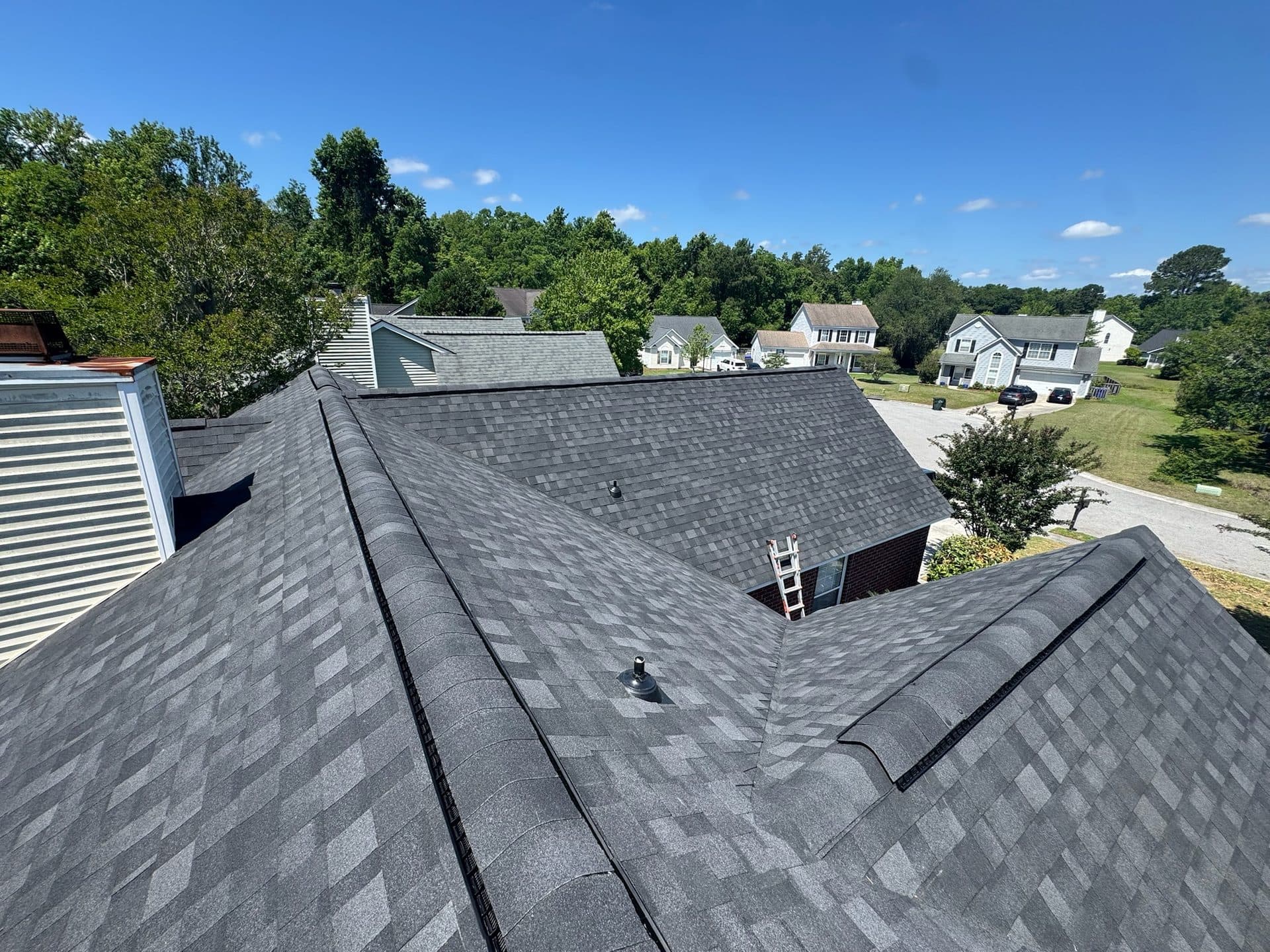
When a roof leaks, the shingles usually are not the culprit. Roof flashing leaks are the most common source, because the metal that seals chimneys, walls, valleys, and pipes takes the hardest wear on the whole roof.
Key Takeaways
- 1Flashing is the metal that seals joints and penetrations on a roof.
- 2Chimneys, wall intersections, valleys, and pipe boots fail most often.
- 3Flashing problems show up as interior stains, not always missing shingles.
- 4Most leaks are repairs, not full replacements, when caught early.
What Flashing Is and Why It Matters
Flashing is the thin metal, usually aluminum or steel, installed wherever the roof has a joint or an opening. Its whole job is to bridge gaps that shingles alone cannot seal: the base of a chimney, where a roof plane meets a wall, the bottom of a valley, and around every pipe and vent.
Because flashing handles the roof's trickiest transitions, it is also where water finds a way in when something is off. That is why so many leaks trace back to flashing rather than the field of shingles.
Where Flashing Fails First
Some spots leak far more often than others. Knowing them helps you and your roofer find the source faster.
The Usual Suspects
- Chimneys, where step flashing and counterflashing can pull loose or rust
- Wall intersections, where the roof meets a vertical wall or dormer
- Valleys, where two roof planes channel a lot of water together
- Pipe boots and vents, where rubber gaskets crack with sun and age
- Skylights, which depend entirely on their flashing kit staying sealed
How to Spot a Flashing Leak
Flashing leaks rarely announce themselves with missing shingles. Instead you see the evidence inside: a brown stain on the ceiling, a damp spot near a chimney, or peeling paint on an interior wall after heavy rain. Because water travels along framing before it drips, the stain is often not directly below the leak.
From the roof, look for rusted, lifted, or cracked metal and for old caulk used as a patch. Sealant smeared over flashing is usually a sign of a past quick fix, not a real repair.
Repair Before It Spreads
Caught early, a flashing leak is a targeted repair. Left alone, the same small leak rots decking, ruins insulation, and invites mold. That is why a small stain is worth investigating now rather than after the next storm. Tucker Contractors handles roof repair in Charleston for exactly these kinds of leaks.
If you are not sure where the water is coming in, a professional roof inspection in Charleston can trace it to the source instead of guessing.
Stop the Leak at Its Source
Chasing a leak with caulk rarely ends well. The lasting fix is finding the failed flashing and replacing it correctly. To have a leak diagnosed and repaired the right way, request a free estimate from Tucker Contractors.