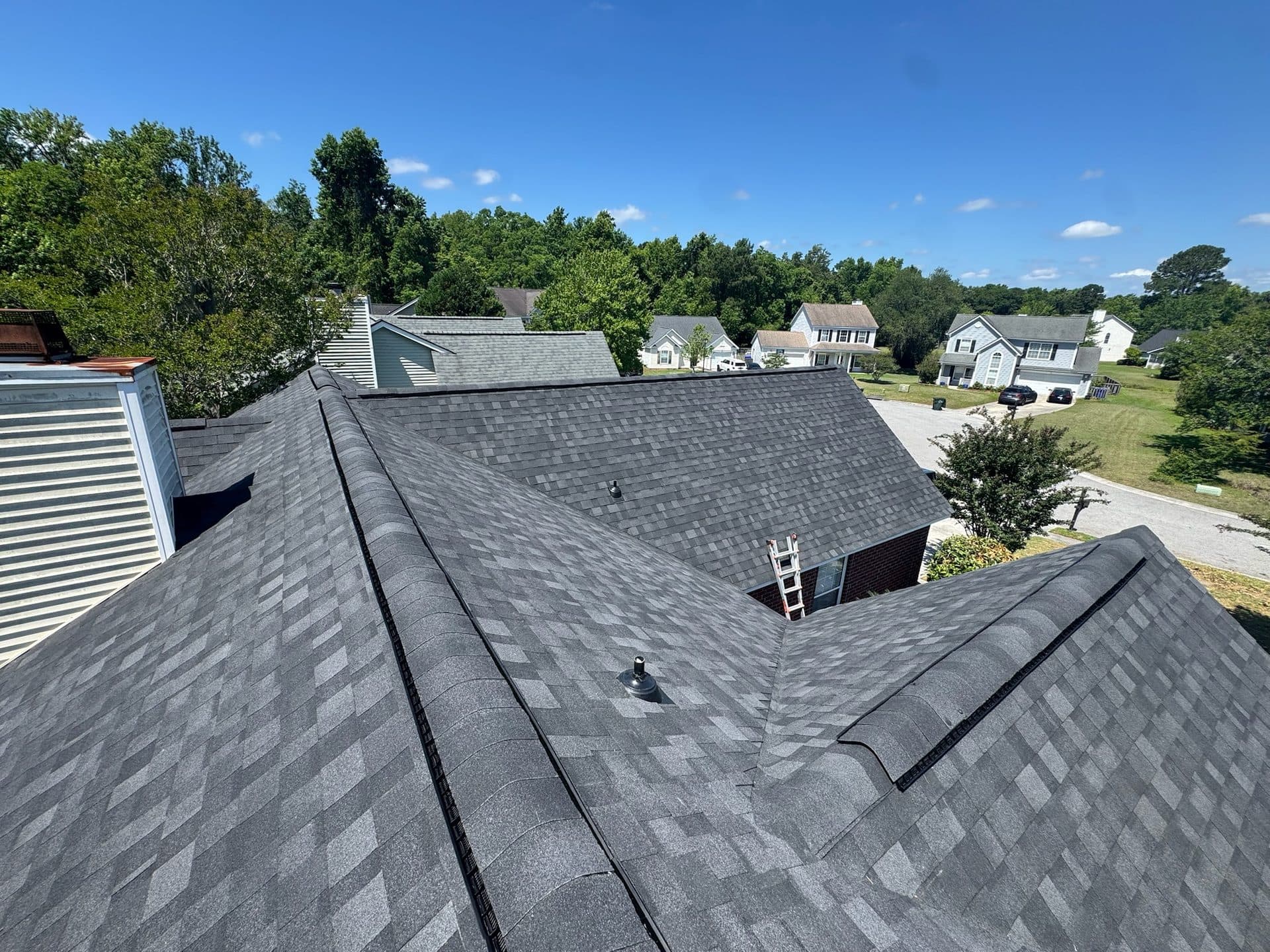
Savannah's mature tree canopy is part of the city's character, but shade, leaves, twigs, and overhanging limbs can make roof maintenance easier to overlook. A simple seasonal routine helps homeowners spot drainage and roofing issues before they become interior leaks.
Key Takeaways
- 1Keep roof valleys and gutters clear so water can drain away from the home.
- 2Watch shaded roof areas for persistent debris and organic growth.
- 3Trim risky branches with qualified help and inspect after major storms.
- 4Schedule a professional inspection when you see stains, displaced materials, or recurring overflow.
Why Tree Canopy Changes Roof Maintenance
Roofs beneath mature trees can collect leaves, twigs, and seed pods in valleys, behind chimneys, and along gutter lines. Shade can also keep damp areas from drying as quickly. None of that automatically means the roof is damaged, but it does mean visual checks and drainage maintenance matter.
Start with a seasonal routine and add an inspection after major storms. Homeowners who want a professional baseline can schedule a Savannah roof inspection.
Keep Valleys and Gutters Moving Water
A roof is designed to shed water. When leaves and small debris collect in a valley or gutter, runoff can slow down or spill over in the wrong place. That overflow may stain siding, saturate landscaping, or contribute to moisture near fascia and soffits.
Check These Drainage Areas
- Roof valleys where two slopes meet
- Gutters below heavy tree cover
- Downspout outlets and extensions
- Areas behind chimneys and near roof-wall intersections
- Low spots where water repeatedly spills over during rainfall
If gutters are undersized, damaged, or difficult to keep clear, compare gutter installation options in Savannah.
Watch Shaded Areas Without Climbing Onto the Roof
Look from the ground for dark streaks, persistent debris, lifted shingles, damaged flashing, or branches touching the roof. Use a camera with zoom rather than walking on the roof. A wet or debris-covered surface can be slippery, and foot traffic can cause additional wear.
Inside the home, pay attention to new ceiling stains, musty attic odors, or damp insulation. Those signs deserve investigation even when the exterior problem is hard to see.
Handle Branches Before They Become Impact Damage
Overhanging limbs can scrape roofing materials, drop debris, or break during high winds. Tree work near a roof can also be hazardous. Use a qualified tree professional for limbs that are large, high, or close to the structure.
After a storm, inspect the ground and roofline for fresh debris or impact signs. If you suspect damage, request roof repair in Savannah before the next heavy rain.
A Simple Savannah Seasonal Checklist
- Walk the perimeter and photograph each roof slope from the ground.
- Clear accessible gutters and confirm downspouts discharge away from the home.
- Look for debris collecting in valleys or behind roof features.
- Check ceilings and attic areas for new moisture signs.
- Arrange qualified trimming for risky branches.
- Schedule a professional inspection after impact damage or recurring drainage problems.
Build a Maintenance Baseline
The easiest way to notice a roof change is to know what normal looks like. Keep a few seasonal photos, address drainage issues early, and document repairs. Request a free estimate from Tucker Contractors when your Savannah home needs a closer look.