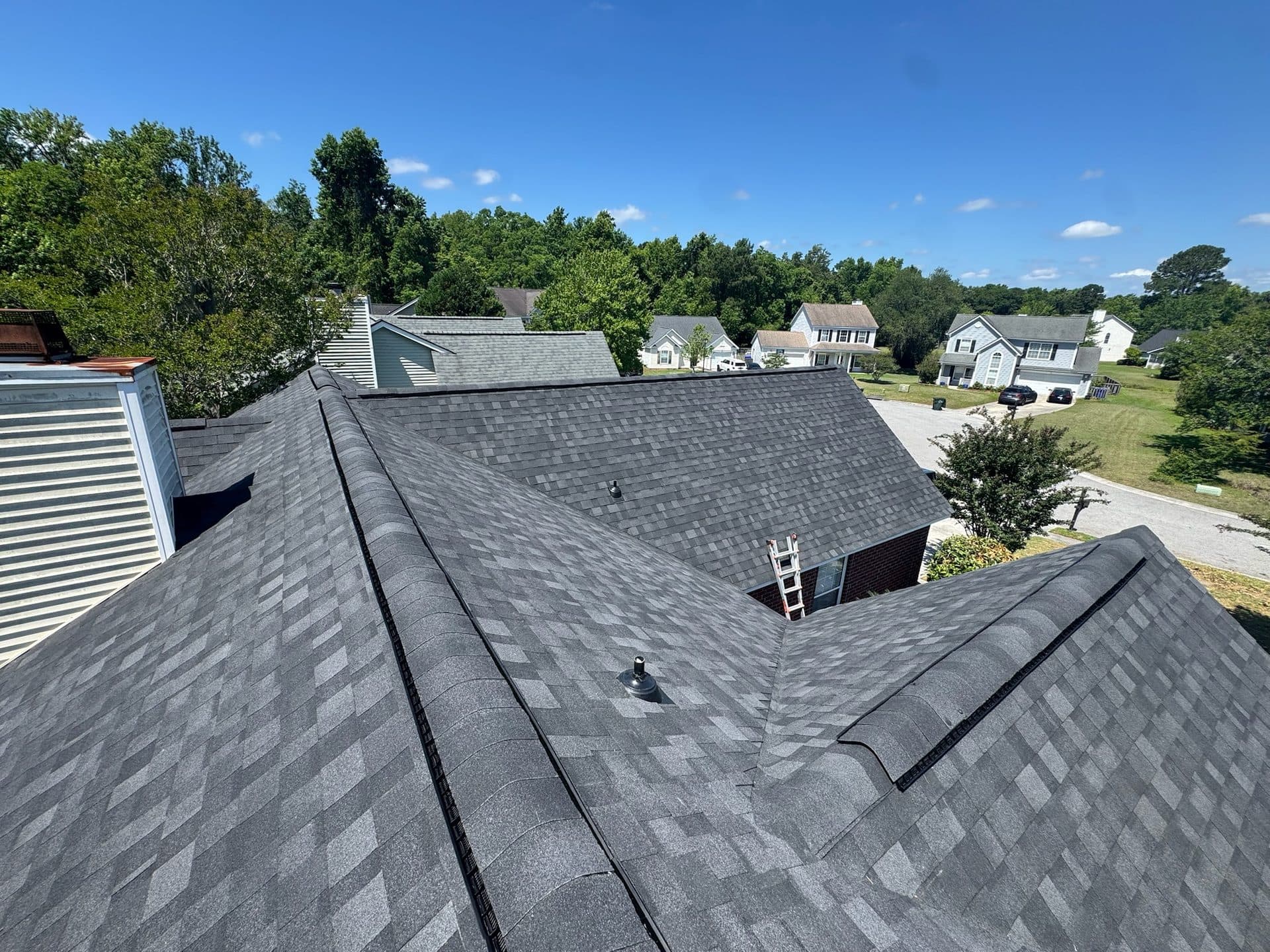
Tropical systems rarely give Savannah homeowners much notice. Good savannah tropical storm roof protection happens in the calm weeks beforehand, when you can clear debris, check flashing, and make sure runoff has somewhere to go.
Key Takeaways
- 1Live oak limbs and debris are a leading cause of roof damage during Savannah storms.
- 2Clogged or undersized gutters push water back under shingles and into fascia.
- 3Loose flashing and lifted shingle edges are the first things wind exploits.
- 4A pre-season inspection finds weak points while repairs are still small.
Savannah Storms Bring Their Own Problems
Coastal Georgia does not need a direct hurricane hit to take roof damage. A tropical storm parked offshore can soak the Savannah area for days, with gusts that test every weak seam on your roof. The combination of heavy rain, wind, and falling debris is what does the harm.
The good news is that most storm damage starts at predictable places. If you address those before a system arrives, your roof has a much better chance of coming through intact.
Deal With the Oak Debris First
Savannah's signature live oaks are beautiful, but they drop limbs, leaves, and Spanish moss onto roofs all season. That debris traps moisture against shingles and clogs valleys and gutters. Before storm season, trim back branches that overhang the roof and clear anything sitting in valleys or against chimneys.
Wet leaf piles are heavy and hold water exactly where you do not want it. Clearing them is one of the simplest things you can do to protect the roof.
Secure Flashing and Shingle Edges
Wind does not lift a whole roof at once. It finds a lifted shingle tab or a loose piece of flashing and works from there. Walk the perimeter and look for shingles that have curled, edges that have come unsealed, and metal flashing around chimneys or walls that has pulled away.
Check These Spots Before a Storm
- Flashing around chimneys, skylights, and where the roof meets walls
- Shingle edges along eaves and rakes that may have lost their seal
- Pipe boots and vents where rubber gaskets crack with age
- Ridge caps that take the most direct wind
If you find lifted or damaged areas, it is worth having them addressed before the next system. Tucker Contractors handles storm damage roofing in Savannah and can assess what needs attention.
Move Water Away From the House
Lowcountry flooding is as much a roof concern as wind. When gutters overflow during a tropical downpour, water backs up under the first course of shingles and spills against fascia and siding. Clean gutters and properly placed downspouts keep that water moving away from the house.
If your gutters overflow even when clean, the system may be undersized for Savannah's rainfall. A larger or better-planned setup helps, and Tucker Contractors offers gutter installation in Savannah sized to coastal storms.
Plan Ahead, Not During the Warning
The worst time to discover a roof problem is when a storm is already named and headed your way. A calm-season inspection gives you time to fix small issues on your terms. To get a clear picture of your roof's condition before the next tropical system, request a free estimate from Tucker Contractors.