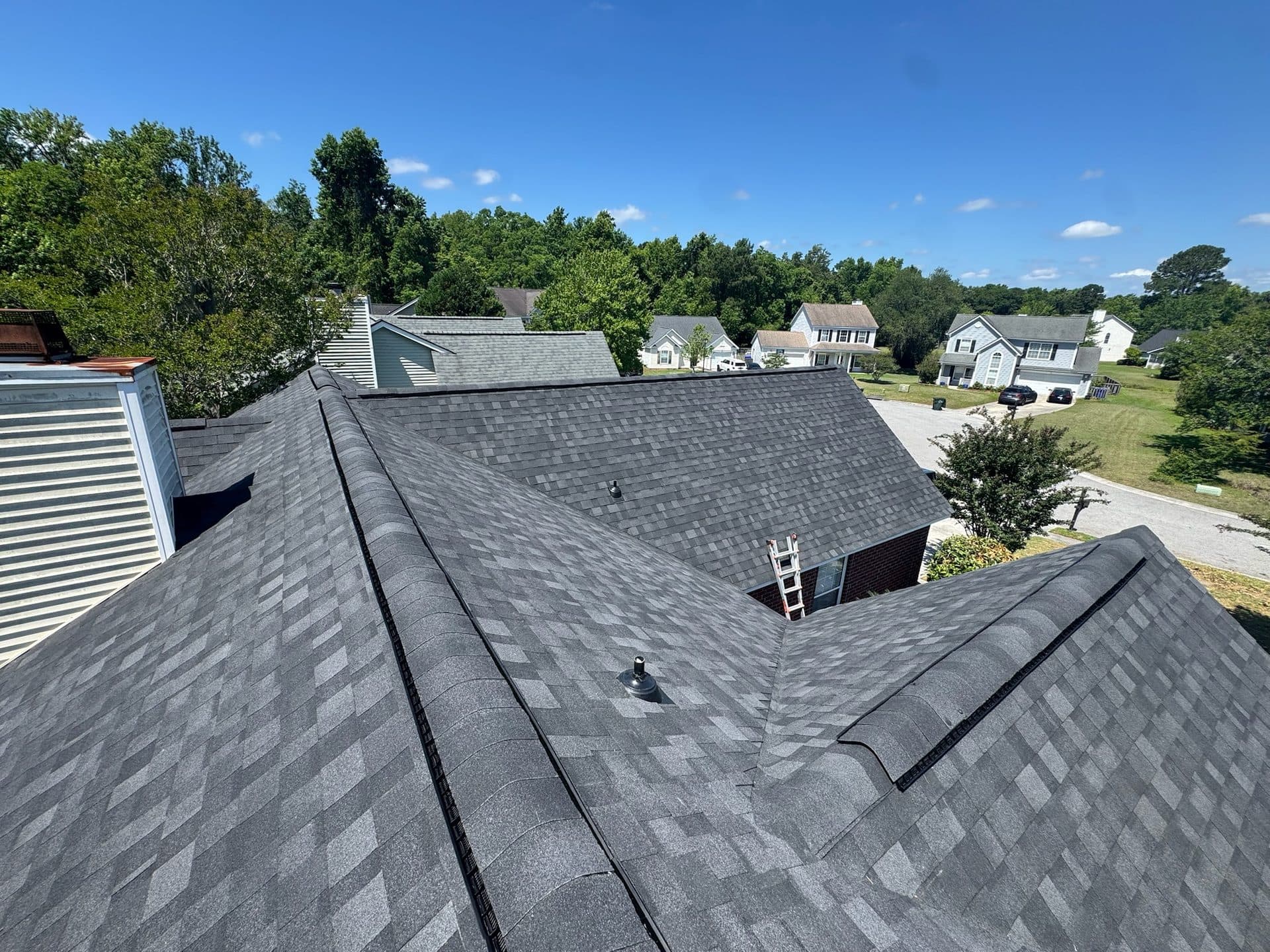
In a hot, humid climate, attic ventilation in Charleston does quiet but important work. Balanced airflow moves heat and moisture out of the attic, which helps protect your shingles, your decking, and your comfort through a long coastal summer.
Key Takeaways
- 1Good attic ventilation balances intake at the eaves with exhaust near the ridge.
- 2Trapped heat and humidity can shorten shingle life and encourage moisture problems.
- 3Ridge vents paired with soffit vents create steady, passive airflow.
- 4Ventilation is easy to plan correctly during a roof replacement.
What Attic Ventilation Actually Does
Your attic acts like a buffer between the roof and the living space below. When it is ventilated well, outside air flows in low and warm air flows out high, carrying heat and moisture with it. When it is not, the attic turns into a hot, damp box that bakes the underside of your roof. In Charleston's climate, that difference adds up over the years.
The two things ventilation manages are heat and humidity. Both are in heavy supply here, and both can quietly work against a roof if they have nowhere to go.
Balanced Intake and Exhaust
Effective ventilation is not just about adding vents. It is about balance. Air needs a low place to enter and a high place to leave. Intake usually comes through soffit vents along the eaves, and exhaust leaves near the peak. If one side is undersized, the whole system underperforms.
A Well-Balanced System Usually Includes
- Soffit or eave vents to let cooler air in low
- Ridge or other high vents to let warm air escape near the peak
- A clear air path so insulation does not block the soffit intake
- Vent capacity matched to the size of the attic
When intake and exhaust are sized to work together, the attic breathes on its own with no moving parts.
Why Ridge Vents Work Well Here
Ridge vents run along the peak of the roof and provide continuous exhaust across the whole top edge. Paired with soffit intake, they create steady passive airflow that does not depend on wind direction or electricity. For many Charleston homes, that combination is a reliable, low-maintenance setup.
Because ventilation ties directly into the roof system, it is easiest to get right during a roof replacement in Charleston, when the decking and vents can be planned together rather than patched in later.
Signs Your Ventilation Might Be Falling Short
A few clues suggest the attic is not breathing well: rooms that stay hot upstairs, an attic that feels like an oven, frost or condensation on the underside of the decking in cooler months, or musty odors that hint at trapped humidity. Premature shingle aging on an otherwise newer roof can also point back to a hot attic.
If any of that sounds familiar, a roof inspection in Charleston can check whether intake and exhaust are actually balanced or just present.
Get Your Attic Breathing the Right Way
Ventilation is one of those details that protects everything above and below it without ever calling attention to itself. If you are unsure whether your attic is working with your roof or against it, request a free estimate from Tucker Contractors and we will take a look.