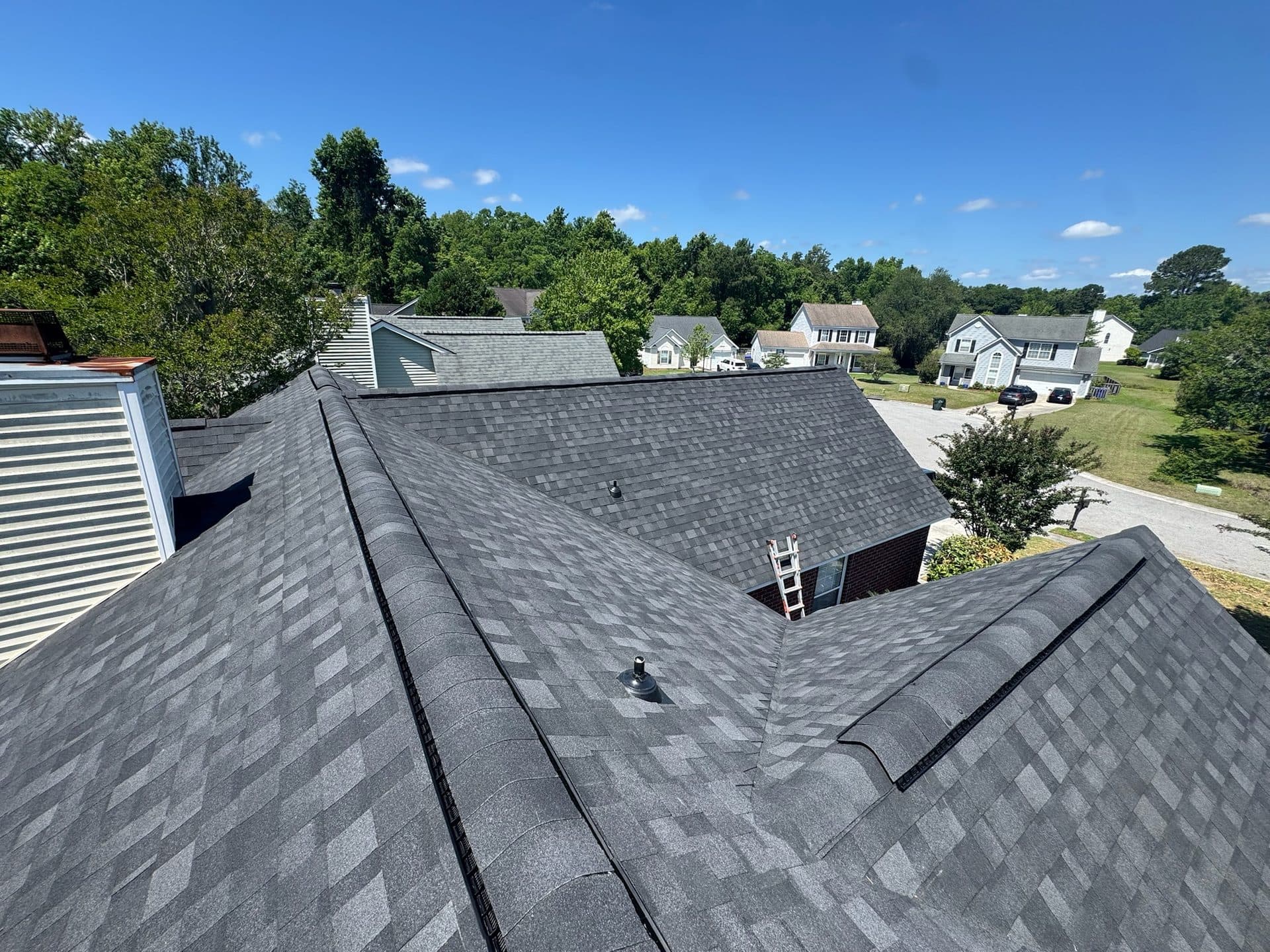
How long a roof lasts depends heavily on where it sits, and the coast is harder on roofing than most inland spots. This article gives realistic lifespan ranges for shingle and metal roofs in our humid, salt-air, storm-prone climate, what tends to cut those years short, and how to stretch the life of the roof you have.
Key Takeaways
- 1Coastal conditions like salt air, humidity, and storms shorten typical roof lifespans.
- 2Asphalt shingles and metal roofs each have different strengths near the coast.
- 3Poor ventilation and skipped maintenance age a roof faster than the material itself.
- 4Regular inspections help you plan replacement before leaks force the decision.
Lifespan Looks Different on the Coast
Manufacturer lifespan ratings assume average conditions, and the Lowcountry coast is not average. Salt-laden air, high humidity, intense sun, and recurring storms all work on roofing materials at once. A roof that might last decades inland often gives fewer trouble-free years here, which is worth knowing before you assume you have plenty of time left.
Asphalt Shingles in a Coastal Climate
Asphalt shingles remain the most common choice on the coast, and quality matters. Architectural shingles generally hold up better to wind than older three-tab styles. Even so, coastal humidity and heat accelerate granule loss and aging, so it is reasonable to expect somewhat fewer years than the package promises. Good attic ventilation and prompt repairs make a real difference.
Metal Roofing on the Coast
Metal roofs tend to last longer than asphalt and shrug off wind well, which appeals to many coastal homeowners. The catch is that salt air can be tough on certain metals and fasteners if the coating or material is not suited to a marine environment. Chosen well and installed correctly, a metal roof can be a long-term coastal performer.
What Shortens Roof Life Near the Water
The roof material is only part of the story. Several factors quietly age a coastal roof faster than expected:
Common Lifespan Shorteners
- Poor attic ventilation that traps heat and moisture against the decking.
- Clogged gutters that let water back up under shingle edges.
- Wind-driven rain finding worn or improperly installed flashing.
- Deferred minor repairs that let small leaks rot the decking.
- Algae and moss holding moisture on shaded north-facing slopes.
How to Get the Most Years
Maximizing roof life is mostly about consistency. Keep gutters clear, address small problems early, and have the roof looked at on a regular schedule rather than only after a leak. A professional roof inspection in Charleston gives you an honest read on remaining life and a maintenance plan, so you are not guessing.
Plan Replacement on Your Terms
Knowing where your roof stands lets you plan rather than react. If yours is nearing the end of its coastal run, exploring roof replacement in Charleston before a failure beats scrambling after one. Request a free estimate from Tucker Contractors and get a clear picture of your roof's coastal lifespan.