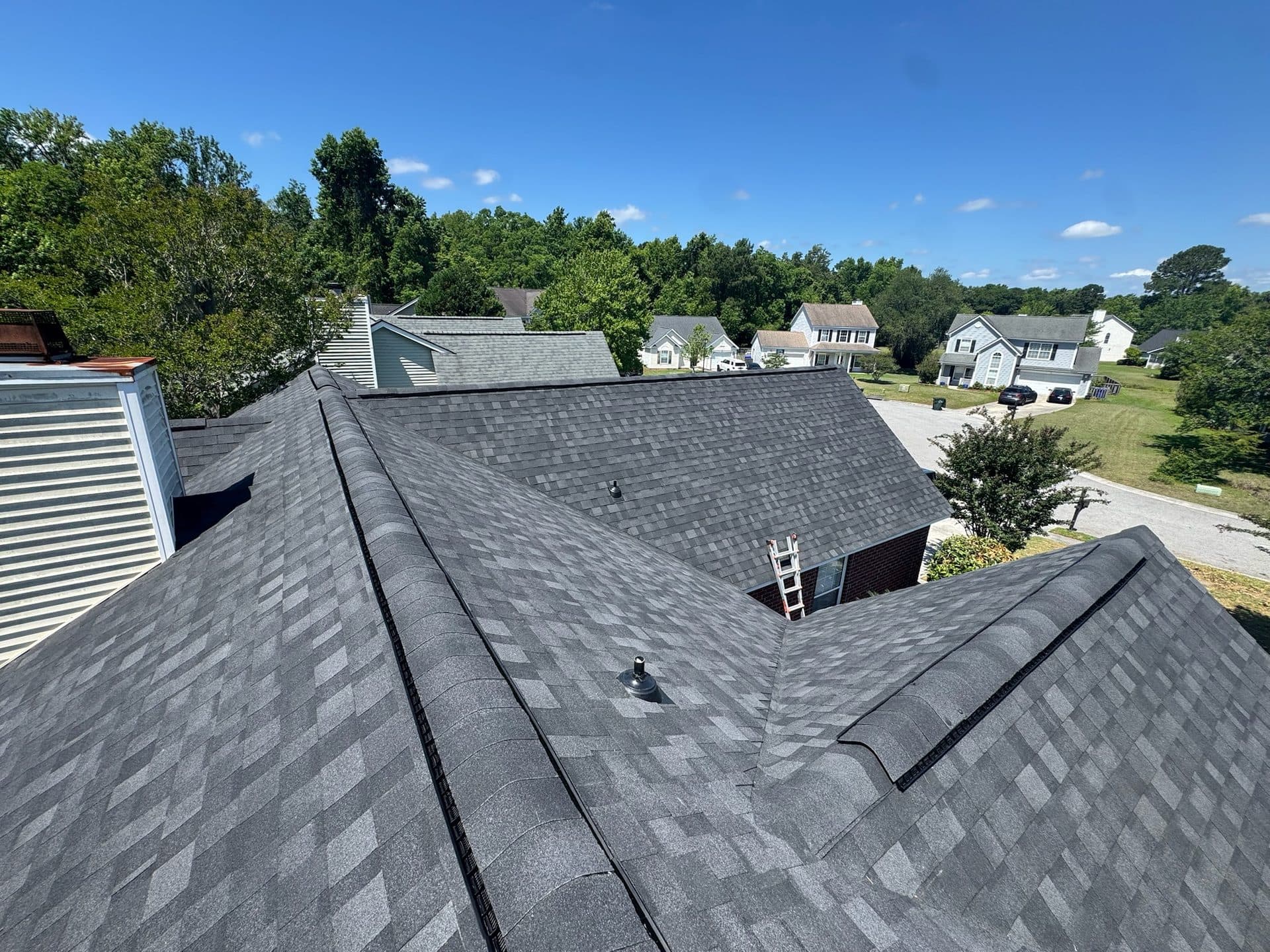
Knowing the signs you need a new roof helps you avoid spending good money on repairs that only buy a little time. On the coast, sun, salt air, and storm season accelerate wear, so these signals matter. Here are seven that suggest replacement may be the smarter spend.
Key Takeaways
- 1Widespread, not isolated, damage is the clearest signal that repair has run its course.
- 2Interior signs like ceiling stains and attic leaks point to roof system failure.
- 3Bald shingles, granules in gutters, and curling edges show advanced wear.
- 4A roof near the end of its service life is often cheaper to replace than to keep patching.
Repair or Replace? Watch for the Pattern
A single damaged area usually calls for a repair. Replacement enters the picture when the problems are widespread, recurring, or tied to the roof's age. The seven signs below tend to show up together, and when several appear at once, a new roof is often the more cost-effective decision than another patch.
1. Interior Leaks and Ceiling Stains
Water spots on ceilings, peeling paint near the top of walls, or active drips during rain mean moisture is getting past the roof system. One isolated leak can sometimes be repaired, but leaks in multiple spots suggest the underlayment and flashing have given up across the roof.
2. Daylight or Moisture in the Attic
If you can see daylight through the roof deck or find damp insulation and a musty smell in the attic, the roof is no longer keeping water out reliably. In the humid Lowcountry, trapped moisture also invites rot in the decking below the shingles.
3. Shingles That Are Curling, Cracking, or Missing
Shingles that curl at the edges, crack, or blow off in patches have lost their weather resistance. After coastal wind events this becomes more common, and once it is widespread, spot repairs stop keeping up.
Other Visual Signs to Check
- Bald spots where the protective granules have worn away
- Piles of shingle granules collecting in the gutters
- Dark streaks and heavy moss or algae growth
- A roofline that sags or dips along the ridge or between rafters
4. Granules Filling the Gutters
Granules protect shingles from the sun. When they wash into the gutters in quantity, the shingles below are thinning and aging quickly. Combined with the visual signs above, heavy granule loss points toward end-of-life wear rather than a fixable defect.
5. The Roof Is Near the End of Its Service Life
Every roofing material has an expected lifespan, and coastal conditions tend to shorten it. If your roof is approaching that range and showing wear, continuing to repair it often costs more over a few years than replacing it once. A roof replacement in Charleston or a roof replacement in Savannah resets that clock with current materials.
6. Repairs Are Adding Up
If you have called for the same leak more than once, or you are budgeting for roof repairs every storm season, the running total is a sign. Money spent chasing failures on an old roof is often better put toward a replacement that solves the underlying problem.
7. Storm Damage You Keep Discovering
Coastal storms can leave damage that surfaces gradually, such as creased shingles, loosened flashing, and small leaks that appear weeks later. When each inspection turns up something new, the roof's overall integrity is compromised, not just one section.
Get a Clear Read Before You Decide
Not every worn roof needs immediate replacement, and an honest assessment is the only way to know. If you are seeing several of these signs, request a free estimate from Tucker Contractors for a straightforward look at whether repair or replacement makes more sense for your coastal home.