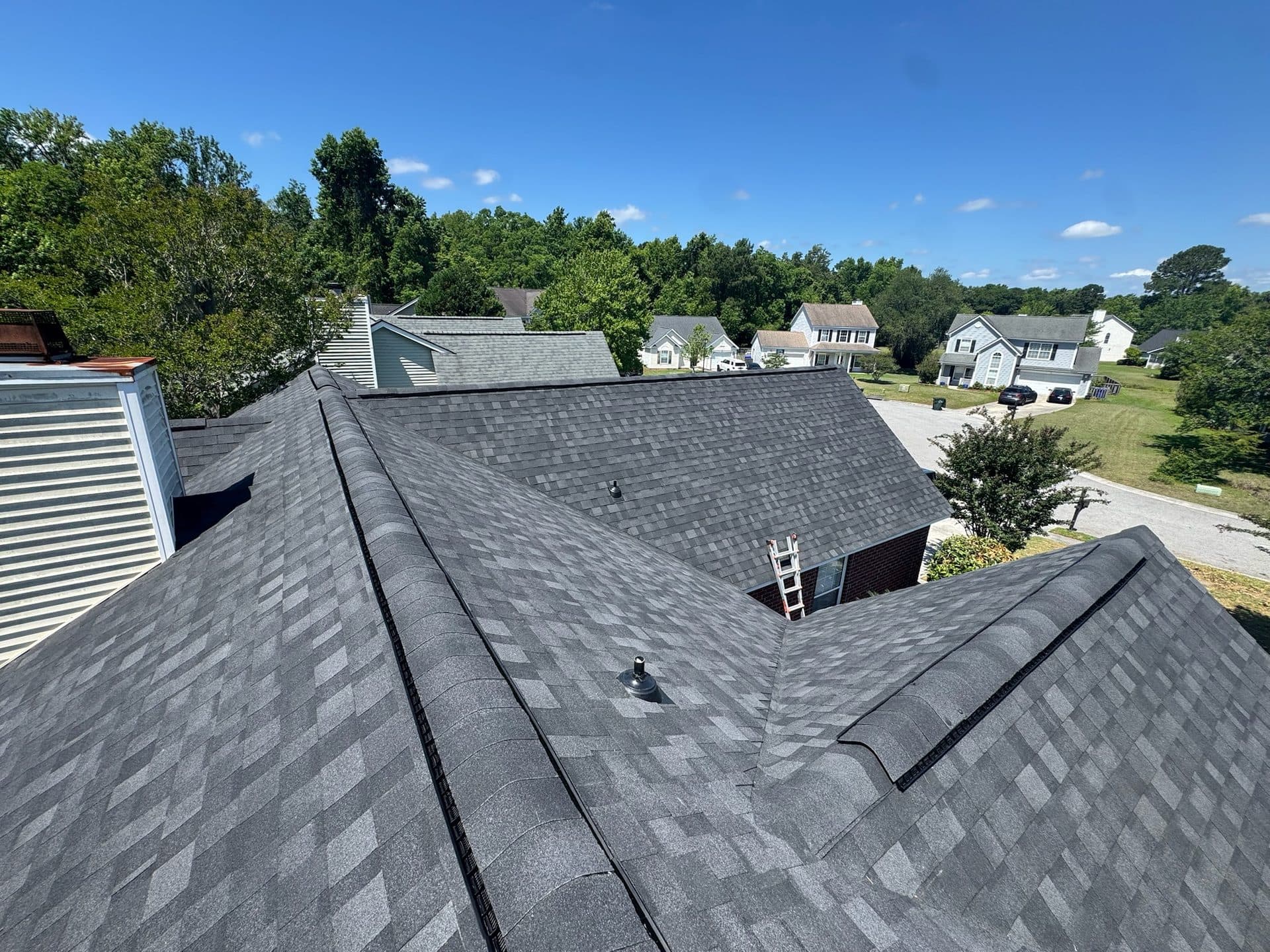
Underlayment is the layer most homeowners never see, but it does serious work the day wind drives rain under your shingles. On a coastal roof, choosing synthetic roof underlayment over traditional felt buys you a tougher, more water-resistant second line of defense.
Key Takeaways
- 1Underlayment is the backup layer that protects the decking when water gets past shingles.
- 2Synthetic underlayment generally resists water better than traditional felt.
- 3Synthetic is lighter, stronger, and holds up to coastal wind and sun.
- 4The right underlayment matters most in wind-driven-rain climates.
The Layer That Earns Its Keep in a Storm
Shingles are the roof's first defense, but they are not the only one. Beneath them sits underlayment, a continuous layer over the decking that protects the wood when water finds its way past the shingles. In a coastal climate where wind drives rain sideways, that backup layer is doing real work, even if you never see it.
For years, asphalt-saturated felt was the standard. Today, synthetic roof underlayment has become the preferred choice for good reasons, especially on roofs that face hurricane season every year.
Synthetic vs Felt, Briefly
Felt is a paper-based product saturated with asphalt. It works, but it can absorb moisture, wrinkle, tear, and degrade in the sun if it is exposed for any length of time. Synthetic underlayment is made from woven polymer materials engineered to resist water and hold up to handling.
Where Synthetic Tends to Pull Ahead
- Water resistance: it sheds moisture rather than soaking it up like felt can
- Strength: it resists tearing during installation and high wind
- UV tolerance: it holds up better if exposed before shingles go on
- Walkability: its surface is generally more slip-resistant for the crew
- Weight: it is lighter, so rolls cover more area with less bulk
None of these are small advantages on a coastal roof, where the underlayment may be the only thing standing between wind-driven rain and your decking during a storm.
Why It Matters More Near the Coast
Inland, underlayment is mostly insurance. On the coast, it can be the difference between a dry attic and a soaked one. When gusts lift shingle edges and push water uphill under the courses, a water-resistant underlayment keeps that moisture from reaching the wood. Over a roof's lifetime, that protection helps preserve the decking and everything below it.
This is one of the components we discuss when planning a roof replacement in Charleston, because the underlayment choice is locked in for the life of the roof.
A System, Not Just a Product
Underlayment performs best as part of a complete, properly installed roof system. The right product paired with correct flashing, fasteners, and ventilation is what actually keeps water out. You can learn more about our full range of roofing services and how the layers work together.
Asking about underlayment is a good sign you are thinking about long-term protection rather than just the surface.
Build a Roof That Holds Up to the Coast
If you are weighing a new roof and want to understand what is going on beneath the shingles, request a free estimate from Tucker Contractors and we will walk you through the materials, including which underlayment fits your home.